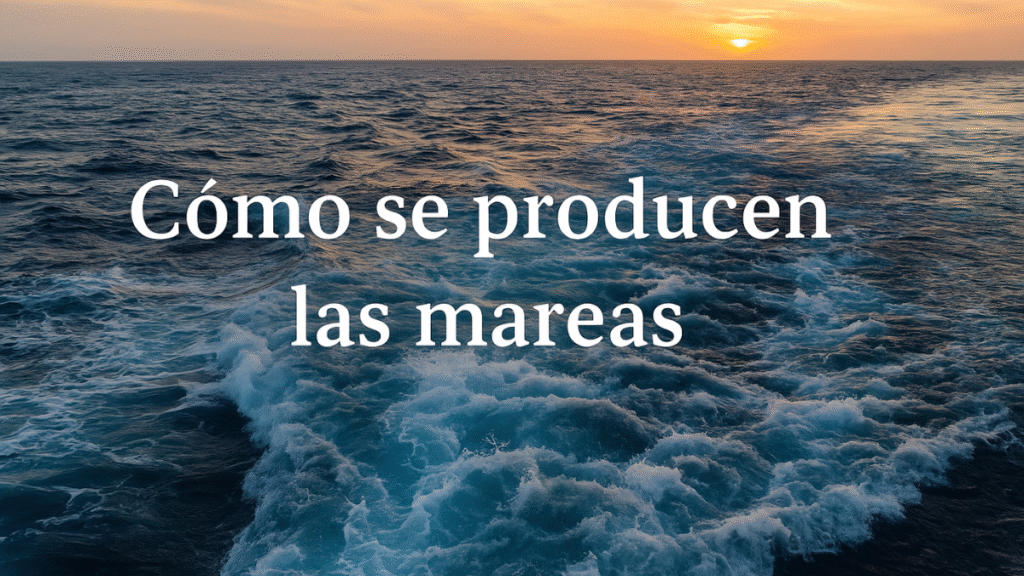
Discover how tides work and why they shape our lives more than we realize. A simple explanation, with myths, science, and curiosities that will make you see the sea differently.
The Mysterious Power of Tides: What You Don’t See but Still Affects You
There are things we see every day without really understanding them, and tides are one of them. They rise, they fall, they change everything along the coast, and most of the time we barely notice. If you’ve ever wondered what force moves that much water every single day, today I’m going to explain it simply, directly, and with a surprise or two along the way.
Because yes, tides are a natural phenomenon with solid science behind them, and they’re also full of symbolism, of stories, and of effects on our bodies and on the Earth itself. Let’s dive into this fascinating subject together!
Where Tides Come From: What Actually Causes Them
The Moon’s Influence, Plus a Little From the Sun
A tide is the result of a dance between the Earth, the Moon, and the Sun. It sounds poetic, but that’s literally what it is. The Moon, with its gravitational pull, tugs at the water on Earth, and since water is fluid, it deforms. That deformation is what we see as high tide or low tide.
Here’s a curious detail, though: the tide doesn’t only happen on the side of Earth facing the Moon, it also happens on the opposite side, because the Earth itself gets pulled slightly too. It’s as if the water stretched out on both sides at once.
The Sun plays a part as well, though a smaller one. When it lines up with the Moon, at new moon or full moon, the forces add together and we get what are called spring tides, which are far more dramatic.
Gravity and Motion, a Constant Relationship
The key is gravity. The Moon pulls on the water, but it also pulls on the Earth. Since the planet is spinning, the areas under that influence keep shifting. That’s why most of the world gets two high tides and two low tides over the course of a lunar day, which runs about 24 hours and 50 minutes rather than a flat 24.
It’s as if the ocean were breathing to the rhythm of the Moon. When you think about it, that’s beautiful. Sometimes the natural and the poetic go hand in hand without our noticing.
Types of Tides You Can Observe
- Spring tides: when the Sun, the Moon, and the Earth are aligned. The gap between high and low tide is very pronounced.
- Neap tides: when they sit at right angles, during the first or last quarter moon. The tides are gentler.
- Semidiurnal tides: two highs and two lows a day, the most common pattern.
- Diurnal or mixed tides: in some areas there’s only one high and one low, as happens along much of the Gulf of Mexico.
The strength of the tide also varies with local geography. On open coastlines the range tends to be far greater than in enclosed seas like the Mediterranean. Everything matters: the shape of the coast, the depth of the water, the currents. Nothing in nature is random.
Tides in Everyday Life, Even If You Don’t Know It
You might think tides only matter to sailors and surfers, but they affect far more than we realize.
They reshape beaches, they shape coastal ecosystems, and they affect seaweed and shellfish harvesting. They set the terms for fishing and tourism, and they may even nudge our mood, the way a full moon is said to.
Tides also affect human infrastructure. In ports, for example, they have to be factored in carefully when ships come and go. The same goes for coastal construction and restoration work, and ferry schedules on many islands are dictated by the rise and fall of the water.
Tides and the Human Body: Pure Fantasy?
It’s a contested topic, but plenty of people say they feel different depending on the lunar phase. If the Moon moves the sea, couldn’t it influence us too, given that we’re largely water ourselves?
Here it’s worth being clear: the Moon’s tidal pull on the water in a human body is vanishingly small, far too weak to move anything. Tides need entire oceans to become visible. There are studies exploring links between lunar phases and sleep, mood, or even childbirth, though the results are inconsistent and nothing is settled. What is certain is that culturally the Moon and the tides have shaped us forever. Not only physically either, since many ancient cultures tied feminine energy to lunar cycles. There’s something lovely in the idea that our internal rhythms are in sync with nature’s, even when we live surrounded by asphalt and screens.
Myths and Legends About How Tides Work
In many cultures, tides were attributed to gods or supernatural forces. In Greek mythology, for instance, Selene, the Moon, was seen as a goddess who ruled the water. Celtic cultures held that the tides were the breath of the sea, and in Asia there are legends linking tides to breathing sea dragons.
Even though we now know how tides work, those stories remain beautiful ways of explaining the unexplainable for people who had no telescopes or satellites. In coastal towns you still hear stories about the sea pulling back strangely, or rising higher than it should. Even knowing it comes down to gravity, the magic survives in the telling.
Extreme Tides, When They Turn Spectacular
In some parts of the world, tides are so powerful they completely transform the landscape several times a day. A few examples:
The Bay of Fundy in Canada, with as much as 50 feet between high and low tide. Mont Saint-Michel in France, an island that joins the mainland and separates again depending on the tide. The estuaries of northern Spain, where the tide dictates the paths and the timetables.
Watching an extreme tide in person is a genuine spectacle. If you get the chance, put it on your list.
There are also places where the tide moves so fast it forms real rivers running backward, as happens with tidal bores in certain rivers in Asia and the Amazon. Watching the water change direction as if it had a will of its own is an experience that leaves you speechless.
How to Know When the Tide Is Coming In or Going Out
These days there are apps and websites that tell you the state of the tide anywhere in the world. For centuries, though, fishermen and sailors knew it just by watching the moon and the sea. Learning to read the tides is a beautiful way to reconnect with nature.
Printed tide tables are still used in plenty of fishing communities. If you love the ocean, it’s a small habit worth picking up for planning walks, swims, or even photo sessions at the water’s edge.
Tides and Climate Change
Rising sea levels from climate change can alter how tides affect coastlines. Areas that used to be covered only at high tide could stay flooded longer, which affects people and ecosystems alike. It’s also worth keeping in mind that when storms coincide with spring tides, the results can be devastating. That’s why coastal resilience comes up so often now: preparing our cities and towns for what’s coming.
Understanding tides today matters more than ever.
Curiosities About Tides You’re Going to Love
Tides are felt far more in the open ocean than in the Mediterranean, because there the water is more enclosed. The Moon drifts about 1.5 inches farther from Earth each year, so tides are slowly changing over time. Some marine animals synchronize their reproduction with the tides. Tides are also detectable, though much more faintly, in large lakes and freshwater bodies.
In some places, people gather shellfish only when the tide allows it. In others, local celebrations revolve around the moment the sea pulls back. These are traditions that remind us we live on a living planet in constant motion.
Frequently Asked Questions About How Tides Work
Are there always two tides a day?
Almost always. Most of the world gets two rises and two falls per lunar day, which is about 24 hours and 50 minutes, but some areas get only one of each.
Can the tide affect my mood or energy?
There’s no definitive scientific evidence, but many people feel mood shifts they associate with the moon and the tides. It may have to do with internal rhythms, or simply with individual perception.
Can tides be predicted precisely?
Yes. Tides follow a regular pattern and can be calculated with great accuracy.
Do tides only affect the sea?
Mainly, yes, but they also reach rivers, lagoons, and estuaries. On top of that, they shape human life all along the coast.
What’s the difference between a spring tide and a neap tide?
A spring tide is stronger because the Sun and the Moon pull on the water together. A neap tide is gentler, because their forces work against each other.
So, Had You Ever Stopped to Think About How Tides Work?
I hope this trip has made you look at the sea differently. Tides are there every single day, moving unimaginable amounts of water, shaping life, and most of the time going completely unnoticed.
I’d love for you to tell me whether you knew all of this or whether you learned something new. Do you have a beautiful memory tied to a tide? Or a place where you’ve seen the sea change dramatically? Leave it in the comments or write to me.
As always, thank you for reading to the end. See you at the shore!