Dive into the fascinating world of the aquarium hobby. Discover its history, practical advice, stories, conservation, and why so many people have fallen for the beauty of a well-kept tank.
You know that moment when you stare into an aquarium and time seems to stop? It’s happened to me since I was a kid. The movement of the fish hypnotizes me, the way the light filters through the water, the living silence that wraps around everything. What started as a simple fishbowl at home turned, over the years, into a real passion.
I’m not the only one, either. More and more of us find in aquariums a way to connect with nature, to find calm, to be creative. Today I want to share everything I’ve learned: the history and the types of tanks, how to start your own, stories, myths, mistakes, and curiosities you might not know about.
A Little History: Where Does the Aquarium Hobby Come From?
Although keeping animals in water containers goes back a very long way, with the Sumerians raising fish more than 4,500 years ago, the aquarium as a hobby started taking shape in the nineteenth century. Back then people were fascinated by the chance to watch underwater life without getting their feet wet. At first they were simple glass containers with a few plants and hardy fish that put up with whatever came their way.
Over time, science and technology made it possible to recreate increasingly complex ecosystems: tropical, marine, coldwater. Today we have silent filters, programmable LED lighting, CO2 controllers, digital parameter meters, and even smart tanks you can manage from your phone. A huge leap, isn’t it?
The hobby really took off with the arrival of affordable equipment in the 1970s and 1980s. Specialty stores, local clubs, and magazines gradually built it into what it is now. Today there are active communities almost everywhere, along with conventions, forums, and social media groups where people share experiences, questions, and wins.
What Is It About Aquariums That Hooks People?
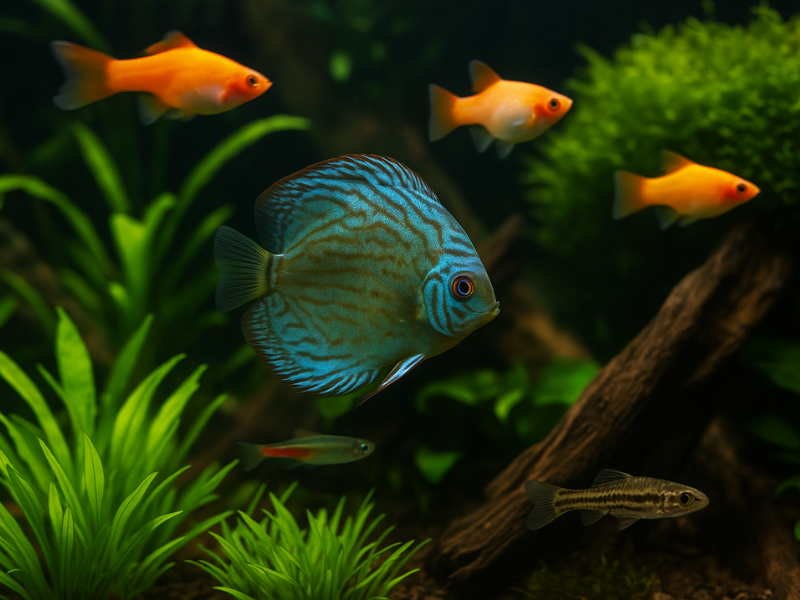
It isn’t only the colors of the fish or how good a tank looks in the living room. The hobby hooks you because it connects you, because it invites you to observe, to care, to understand small natural cycles repeating behind the glass. It’s like having a little piece of the planet at home and being responsible for its balance.
There are days when I sit in front of the tank and simply stay there, breathing to the rhythm of the water. It’s almost active meditation. Turning the light on in the morning, watching its residents wake up, adjusting parameters, checking that everything is fine, all of it becomes a ritual that settles me.
There’s also something deeply creative about setting up an aquarium. Choosing the plants, the rocks, designing the landscape, combining compatible species. It’s like building a garden underwater, and watching it evolve over time is an enormous pleasure. Sometimes it surprises you, sometimes it teaches you patience.
Let’s not forget the emotional side either. Many of us form bonds with our fish. Yes, even though it seems like they don’t recognize you, there are species that swim over when they see you, and some have distinct personalities.
Types of Aquariums and Styles You Can Try
Tropical Freshwater Tanks
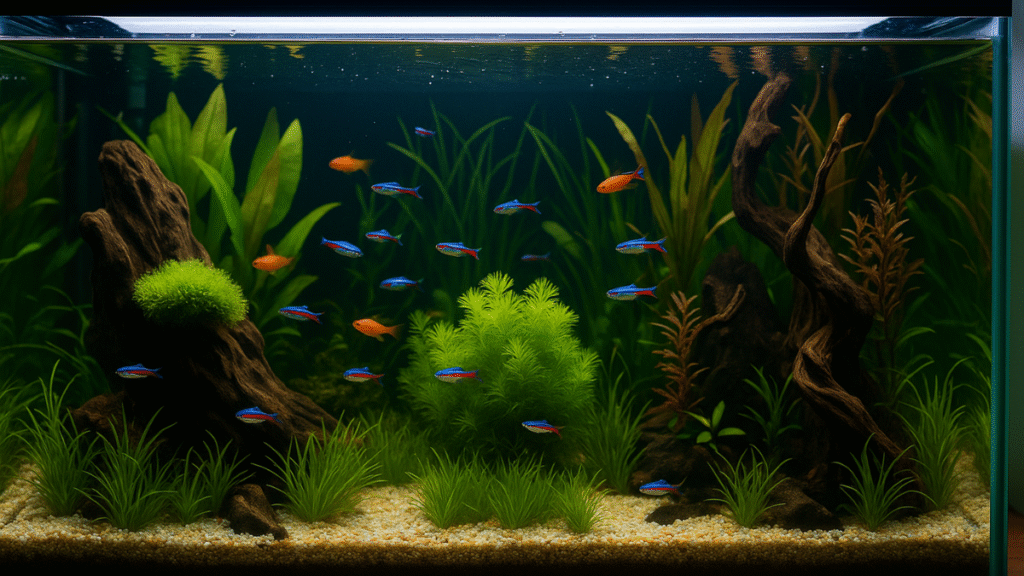
These are the most popular, since they let you keep a wide variety of fish and plants. From the classic guppy to complex communities with tetras, angelfish, cory catfish, bettas, shrimp, and snails. A fascinating world full of color.
Within this category you can go for different styles:
- Biotope: recreating a specific natural habitat, like the Amazon or Southeast Asia, using only the plants and animals found in that environment.
- Dutch: heavily planted and visually harmonious, where the plants take center stage.
- Iwagumi: a minimalist Japanese style built around stones as the central element, very calming to look at.
Each style has its charm and its challenges. Personally I love combining a biotope with creative touches, respecting nature while leaving a little room to play.
Saltwater Tanks
More demanding, but absolutely hypnotic. Corals that look like living flowers, intensely colored fish like clownfish and tangs, anemones swaying with the current as if they were breathing. It all looks like it came out of a nature documentary.
That said, they require more equipment, more control, and more experience. The parameters are more delicate, they need properly mixed saltwater, specific lighting for corals, frequent testing, and very careful planning.
When you pull it off, though, the result is a window onto the ocean.
Planted Tanks and Aquascaping
Here the plants are the stars. There are genuine artists of underwater landscaping who create living works of art. They use trimming, composition, lighting, and fertilization techniques to build scenes that look like submerged forests.
Some planted tanks look like paintings in motion. They take dedication, but they’re among the most satisfying to maintain. On top of that, the plants help purify the water, oxygenate the environment, and give the fish places to hide.
Setting Up a Tank: The Basics So You Don’t Give Up Trying
If you’re thinking about starting, the first step is doing your homework. A lot of people make mistakes for lack of information, and that gets frustrating fast. Here are some basic steps for starting off on the right foot:
- Pick the right size: against all expectation, a small tank is harder to keep stable. Starting somewhere between 15 and 25 gallons is ideal.
- Cycle the tank: before adding fish, you have to wait four to six weeks. That’s how long the filter needs to build the bacterial colony that will process waste.
- Watch your water parameters: pH, hardness, temperature, ammonia, nitrite. Every species has its preferences. There are easy test kits that measure all of it.
- Plants and decor: think about design, balance, and function. Live plants help keep the water healthy and reduce stress in fish.
- Regular maintenance: partial water changes each week, between 15 and 30 percent, cleaning filters, trimming plants, checking on your fish’s health.
The key is going slowly, observing a lot, and not making hasty decisions. It’s a slow process, but a beautiful one.
The Aquarium Community Keeps Growing
The hobby has grown enormously over the past twenty years. Specialty stores are better equipped, the products are better, reliable information is easier to find, and the online community is very active.
In most major cities there are aquarium clubs that organize meetups, workshops, talks, and even aquascaping contests. Many of them run fish auctions where you can pick up healthy stock from other hobbyists at a fraction of store prices.
There are also excellent content creators out there. Between YouTube channels, blogs, and long-running forums, you can learn a tremendous amount for free before spending a dollar on equipment.
On top of that, there are conventions and trade shows where new products get introduced, demonstrations happen, and people swap experiences in person.
Conservation and Awareness: A Responsible Hobby
It’s important to talk about the ethical side of this hobby too. Not everything goes. This isn’t about collecting pretty fish with no idea where they come from or how to care for them.
- Go for captive-bred fish.
- Avoid species that could become invasive in local waters if they were ever released.
- Never release fish into the wild.
- Research before you buy: adult size, compatibility, and specific needs.
A responsible approach to this hobby is also a way of educating people and raising awareness about aquatic ecosystems.
What Keeping an Aquarium Has Taught Me
Since I’ve had tanks at home, I’ve learned far more than the names of fish. I’ve learned to observe closely, to be patient, to accept that not everything can be controlled. Sometimes things don’t go the way you expected and you have to start over.
I’ve also had beautiful moments, like discovering fry had been born without my noticing, or watching a plant that looked dead push out new growth. I’ve connected with wonderful people who share this passion, and I’ve found in this hobby a daily source of calm.
Having an aquarium is like having a window into another world, and also a mirror. It teaches you things about yourself you didn’t know you needed to see.
Frequently Asked Questions About the Aquarium Hobby
Is setting up an aquarium expensive?
It depends on what you’re after. A simple freshwater tank can be set up for a reasonable amount if you plan it sensibly. You can also build it up little by little.
Which fish do you recommend for beginners?
Guppies, platies, neon tetras, cory catfish, and bettas tend to be hardy and easy to keep. Always check whether they’re compatible with each other and how big they get, though.
Can I have an aquarium without plants?
Yes, but live plants bring real benefits. They oxygenate, they absorb nitrates, and they create natural hiding places. They also make the tank far more beautiful.
How much time does it take?
Twenty to thirty minutes a week for basic maintenance, plus a few minutes of daily observation, is enough. Fair warning, though: it’s addictive.
Where can I learn more?
YouTube, blogs, forums, specialty stores, and social media groups. What matters is cross-checking your sources and asking questions whenever you’re unsure.
What About You? Have You Thought About Having Your Own Little Underwater World?
If you’ve made it this far, you probably already feel something for this magical world. I’d love to know whether you already have a tank, whether you’re just starting out, whether you’ve run into a problem, or whether the idea simply appeals to you.
Leave me a comment, share your experience, or write to me. This hobby is so much more enjoyable when it’s shared.
Thank you for reading, for letting yourself drift underwater with me, and for being part of this little community with a blue soul.