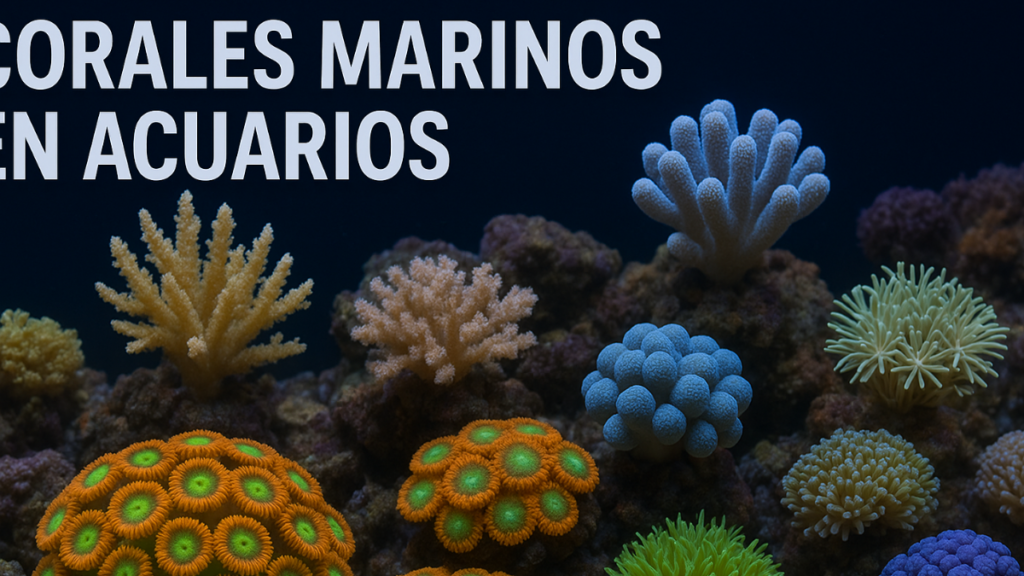
Discover the types of marine corals, their colors, their ecological roles, and how to care for them in an aquarium. A complete, approachable guide for understanding and protecting reefs.
In this guide I want to share everything I’ve learned about marine corals: what types exist, why they glow, what jobs they do in the ocean, how we can care for them in a tank, and why their conservation matters more than ever.
Because yes, marine corals are beauty, and they’re also responsibility.
What Marine Corals Really Are, and Why They Surprise You Once You Know
It’s happened to all of us: you see a coral for the first time and think it’s a plant. That’s normal. They don’t move like a fish, they don’t look “animal,” and many of them look like flowers. Here comes the first big surprise, though: corals are animals. Colonial animals, to be exact.
Every tiny “flower” you see in a colony is a polyp. That polyp has a mouth, tentacles, and a relationship with tiny algae, the zooxanthellae, so close that they literally share a life.
Polyps group together and, over thousands of years, build reefs that become home to a quarter of all marine life on the planet. Incredible, isn’t it?
The Ocean’s Most Perfect Partnership: Coral Plus Zooxanthellae
This symbiosis is so perfect it looks hand-designed:
• The zooxanthellae live inside the coral’s tissue.
• They photosynthesize using light.
• They produce energy that feeds the coral.
• In exchange, the coral gives them shelter and nutrients.
On top of that, these algae account for much of a coral’s color. When they’re happy, the coral looks vibrant. When they get stressed and leave, the coral bleaches.
That single detail explains why light, nutrients, and stability matter so much both in the ocean and in our tanks.
Marine Corals as Colonial Organisms
A single coral can be made up of thousands of identical polyps, all connected, sharing nutrients and reacting to their environment as one. That’s why when a coral “gets upset,” it isn’t one part that reacts: the whole colony retracts. When it thrives, growth shows in every direction.
This colonial nature defines its entire biology:
• how they grow.
• how they reproduce.
• how they defend themselves.
• how they relate to other living things.
They’re fascinating from any angle.
The Essential Role of Corals in Marine Ecosystems
When I discovered what corals actually do for the ocean, I understood they’re far more than a pretty postcard. Without them, tropical seas would be silent worlds, plain underwater deserts.
Corals are architects, protectors, producers, shelter, and food. They’re the foundation of some of the richest ecosystems on the planet.
Marine Corals as Shelter and Home
A healthy reef is packed with life:
• small fish hiding among the branches.
• crustaceans finding perfect crevices.
• mollusks clinging to the surface.
• species laying eggs in the cavities.
Corals create three-dimensional structures that work like buildings, tunnels, and underwater apartments. The same thing happens in a tank: a shy fish finds safety among Euphyllia or Montipora exactly as it would in the sea.
Natural Barriers Against Storms
This is one of their least known jobs. Reefs act as natural walls against storms and erosion.
• They slow waves down.
• They dissipate energy.
• They protect coastlines and mangroves.
• They prevent beach loss.
When a reef disappears, the coast is left exposed. In many regions of the world that means lost homes, lost income, and lost stability.
Their Role in Producing Oxygen
A large share of the planet’s oxygen, likely more than half, comes from the sea. Phytoplankton does most of that work, though the zooxanthellae living inside marine corals contribute too.
Through photosynthesis, they release oxygen into the water, which then passes into the atmosphere. A silent but vital process.
Symbiosis: A Story of Balance
A coral and its symbiotic alga live right at the edge. A small rise in temperature can break their balance, and that break is what causes bleaching. Understanding this relationship is the key to caring for corals both at sea and at home.
What Happens When Marine Corals Disappear
It’s hard, but necessary:
• the fish leave.
• the reef collapses.
• biodiversity falls.
• turbidity rises.
• coastal protection is lost.
• local economies collapse.
That’s why responsible reefkeeping matters more than we think. Every coral we understand and care for helps preserve its species.
Types of Coral: Colors, Shapes, and Personalities
One of the most beautiful things about the coral world is that no two species are alike. Each coral has its own pace, its character, its way of growing, even its own temperament. Some seem to dance with the flow, others look like sculptures, others glow like neon, and each type brings something different to the reef.
Here’s how they behave in the ocean, and how they behave when we keep them in a tank.
SPS Stony Corals: The Reef Architects
SPS, or Small Polyp Stony corals, are the ones that build the great reefs. They have tiny polyps and very hard skeletons. Demanding, yes, but spectacularly beautiful.
Examples:
• Acropora
• Montipora
• Pocillopora
• Stylophora
• Seriatopora
What defines them:
• a huge need for light.
• strong flow.
• very stable parameters.
• vibrant colors under blue lighting.
At sea they form enormous structures that house thousands of species.
In aquariums they’re the dream of many hobbyists, and also their biggest challenge.
What They Bring to the Ecosystem
• they create underwater architecture.
• they act as barriers.
• they offer three-dimensional shelter.
• they regulate currents.
• they trap sediment.
Without them, the reef loses shape and stability.
What They Bring to the Aquarium
• a spectacular variety of shapes.
• fluorescent colors.
• dynamic growth.
• impressive visual presence.
They demand a mature system and extreme consistency, though.
LPS Stony Corals: Texture, Movement, and Color
LPS, or Large Polyp Stony corals, have big, fleshy, colorful polyps. They’re easier than SPS and have incredible presence.
Examples:
• Euphyllia (hammer, torch, frogspawn)
• Acanthastrea / Micromussa
• Favia / Favites
• Caulastrea
• Duncanopsammia
What defines them:
• soft, elegant movement.
• intense colors.
• stinging tentacles in some species.
• moderate light.
• gentle flow.
At sea they add volume and texture, filling gaps between stony colonies.
In aquariums they make perfect centerpieces, thanks to their hypnotic movement and vivid colors.
Soft Corals: Flexible, Adaptable, and Full of Life
Soft corals have no calcareous skeleton. They’re flexible, hardy, and perfect for beginners. They grow fast, adapt well, and create a very natural look.
Examples:
• Zoanthus
• Sarcophyton
• Xenia
• Sinularia
• Clavularia
• Anthelia
What defines them:
• varied colors.
• plenty of movement.
• tolerance for changes in the system.
• fast growth.
• low light requirements.
At sea they’re pioneers after storms and sedimentation events, the first to recolonize.
In aquariums they’re ideal for getting started and building a stable reef without complications.
Non-Photosynthetic Corals: Delicate Jewels of the Deep
These corals live where light barely reaches, so they depend entirely on food suspended in the water. They’re gorgeous, but delicate.
Examples:
• Tubastraea
• Dendronephthya
• Chili coral
• Menella
What defines them:
• they need frequent feeding.
• intense colors.
• no light requirement.
• very sensitive to parameters and flow.
In aquariums they’re a challenge, but their beauty makes up for the effort.
How Variety Transforms a Reef, and a Tank
In nature, coral distribution depends on light, nutrients, current, competition, and depth.
That logic can be replicated at home:
• soft corals → low or side areas.
• LPS → mid areas with gentle flow.
• SPS → high areas with intense light.
Once you understand this dynamic, setting up a tank becomes easier and more natural.
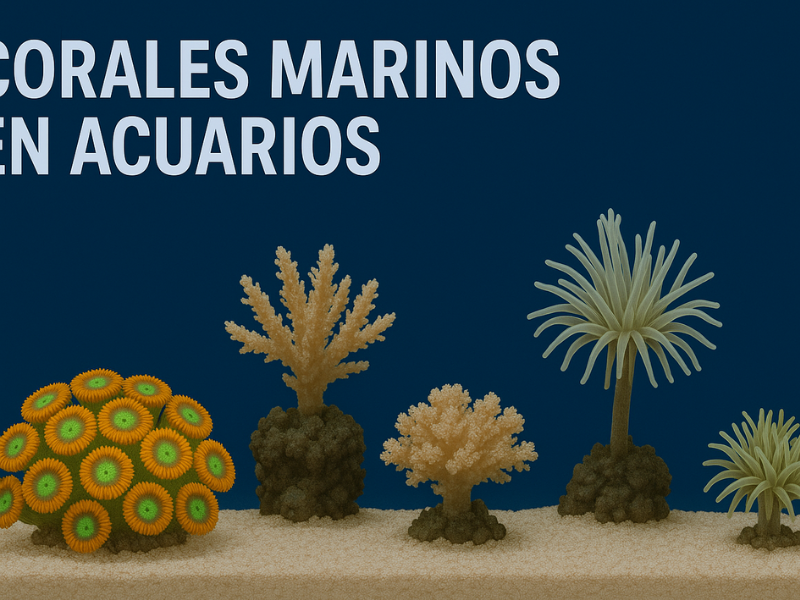
Coral Colors: Why They Glow and What They Mean
If anything leaves people speechless, it’s coral color: fluorescent pinks, neon greens, electric blues, intense oranges. All those colors have a biological purpose.
Fluorescent Proteins: The Secret Behind the Glow
Many corals produce proteins that absorb blue and ultraviolet light and send it back as color:
• green.
• pink.
• red.
• blue.
• purple.
• yellow.
These proteins act as natural sunscreen. In a tank, under actinic light, they look spectacular.
The Role of Zooxanthellae in Color
Zooxanthellae are responsible for the browns, golds, and soft greens.
When there are many, the coral looks browner.
When there are few, the fluorescent colors stand out more.
What Colors Tell You in the Ocean
Colors speak:
• intense colors → health.
• brown tones → excess nutrients.
• pastel tones → lots of light.
• bleaching → serious stress.
Every shade tells a story about the ecosystem.
What Colors Tell You in a Tank
Exactly the same things:
• browns → more light or fewer nutrients needed.
• pale → too much light or too few nutrients.
• bright → optimal conditions.
• sudden color loss → stress or instability.
Color is your most reliable test.
Lighting: The Key to Spectacular Color
In a tank, light defines everything:
• intensity.
• spectrum.
• duration.
• stability.
Recommended lighting:
• blues (420 to 470 nm).
• violets.
• moderate UV.
• white for balance.
Dialing in the light transforms any coral.
Water Chemistry and Color
Trace elements that hobbyists commonly associate with color:
• Iodine → blue tones.
• Potassium → pinks.
• Iron → greens.
• Manganese → fluorescence.
It isn’t paint, it’s metabolism. Worth noting that these links come mostly from hobbyist experience rather than controlled studies, so dose carefully.
Ecological Functions of Marine Corals: Beauty That Sustains Life
The more I learned about corals, the more I understood that their real value goes far beyond appearance. Corals are fundamental to marine balance. Without them, the tropical ocean would lose structure, biodiversity, and stability.
Marine Corals Are Ecosystem Engineers
Corals literally build underwater cities. They can modify currents, slow sediment, and generate microhabitats.
In the ocean:
• they create three-dimensional structures.
• they make the existence of thousands of species possible.
• they stabilize sandy bottoms.
• they regulate water movement.
In aquariums:
• they shape the aquascape.
• they offer natural shelter.
• they reduce stress in fish.
• they generate microcurrents.
When a coral grows, it transforms its surroundings.
Marine Corals Are Natural Filters of the Ocean
When I first found this out my head nearly exploded, because we always think of corals as beautiful, fragile animals and almost never as tireless workers cleaning the seawater.
Corals, especially the stony ones (SPS and LPS), filter microscopic particles, capture plankton, trap sediment, and transform nutrients. In nature that has a massive impact: they reduce turbidity, let light reach the seafloor better, and maintain a chemical balance that benefits thousands of species.
In the ocean, a healthy reef works like an enormous natural filtration system:
• It captures organic matter that would otherwise break down uncontrolled.
• It regulates nitrate and phosphate levels, working as a team with symbiotic algae and bacteria.
• It keeps a constant cycle running between nutrients, light, and oxygen.
The most fascinating part is that this process doesn’t only keep the reef’s water clean, it keeps dead zones from forming around it. That’s how vital they are.
Here’s the part that matters most to us as reef keepers: in our tanks, corals can replicate part of this function, as long as we maintain a balanced ecosystem. They don’t filter nearly as much as in the ocean, of course, but they help stability enormously.
How They Act as Filters Inside the Tank
In an aquarium, even a small or medium one, every coral adds to water clarity. It captures particles, consumes nutrients, and works with the microfauna to maintain a stable balance no mechanical filter can imitate perfectly.
I always explain it this way: a coral isn’t an ornament. It’s an extremely efficient organism that feeds on what the system has to spare. It literally makes use of our “waste,” and put like that, it sounds like a total win-win.
Inside the tank they do this constantly:
- They capture suspended particles through their polyps.
- They absorb ammonium, nitrate, and other compounds to feed their zooxanthellae.
- They regulate microflows as they expand and retract, which helps natural water movement.
- They encourage beneficial bacteria to colonize their skeletons.
What does that mean for us? Less turbidity, fewer nutrient spikes, and in many cases fewer unwanted algae.
Why This Changes How You Design a Reef Tank
Keeping this in mind flips a switch, because suddenly you stop thinking of corals as “pretty plants” and start seeing them as an active part of the tank’s engine.
When I understood that every polyp was working in my favor, I stopped being afraid to populate the tank with them. Always within what the maturity of the system allowed, of course.
One key idea is thinking about complementary functions. For example:
• Zoanthus and ricordea add color and consume nutrients slowly but steadily.
• Fast-growing stony corals like certain acroporas or montiporas demand more nutrients and minerals, helping stabilize calcium and alkalinity.
• Soft corals like sinularia increase water exchange and trap particles.
Combine them and you don’t just get a beautiful tank, you get a more stable system.
Corals Also Improve Oxygenation, Even If Indirectly
This rarely gets mentioned, but it deserves its own section.
The zooxanthellae, those microscopic algae living inside the coral, photosynthesize. They’re no substitute for good filtration or for the water movement your pumps provide, but they do add a little extra oxygen during the day.
That exchange, plus the slight water movement polyps create as they open and close, improves surface oxygenation and helps your skimmer work more efficiently.
It’s a small but constant effect, and in a closed system like a reef tank, every percentage point counts.
Their Role as Chemical Stabilizers
We sometimes forget that coral skeletons are made mostly of calcium carbonate.
What happens when they grow inside the tank? They consume calcium, magnesium, and alkalinity, balancing elements that might otherwise climb uncontrolled or swing unpredictably.
When a tank has well-established corals, the values tend to settle. When it has none, the parameters are far less predictable.
It’s as if the coral, through its growth, chemically regulated the tank.
What the Ocean Teaches Us to Apply at Home
Watch a natural reef and you’ll see three characteristics we should replicate in tanks:
• Diversity: many different species, each with a function.
• Constant flow: the water never stops moving.
• Stability: parameters don’t swing abruptly.
At home, once you understand that corals are part of the balance and not just the scenery, everything changes. You become more aware of flow, of tank maturity, of the importance of microplankton, of light quality, of the balance between nutrients and microlife.
We don’t design a tank in order to put corals in it. We create an ecosystem where corals can do what they do best.
The Essential Role of Corals in Marine Ecosystems
Corals aren’t simply pretty animals. They’re architects, engineers, protectors, and a source of life for thousands of species. Without them, coastal life would literally be a different thing entirely.
I mean it: the more I learn about them, the more convinced I am that every reef tank, however small, is both a responsibility and a tribute to a fascinating ecosystem.
Corals as Shelter and Home for Thousands of Species
A healthy coral reef is one of the densest, most diverse habitats on the planet. To give you an idea, about 25 percent of marine life depends on reefs, and they cover less than 1 percent of the ocean floor. Incredible, isn’t it?
Marine corals offer:
• Cavities where small fish hide from predators.
• Places where mollusks and crustaceans settle and attach.
• Breeding zones where many species lay their eggs.
• Gathering points where entire schools of fish feed.
It’s no coincidence. The three-dimensional structure of coral, whether stony or soft, creates a natural complexity that lets different species occupy different levels and zones, like an underwater apartment block.
When you have a reef tank and watch a clownfish adopt an anemone, or a cleaner shrimp pick a corner among the polyps, you understand that the same dynamic plays out at massive scale in the ocean.
Corals as Natural Barriers Against Storms and Erosion
This surprised me enormously when I found out. Reefs act as a physical shield for coastlines.
They absorb wave impact, slow tropical storms, and prevent erosion of beaches and mangroves. It doesn’t get discussed much, but studies show that in areas where corals have died, beaches retreat far faster. Why? Because without corals, wave energy reaches the shore at full strength. With corals, the wave breaks earlier, loses power, and lets coastal life thrive.
Think about the economic, social, and ecological impact of that. Without moving an inch, corals literally protect entire cities.
Their Role as Oxygen Producers
We tend to associate oxygen production with forests, but the reality is that a large share of the oxygen we breathe comes from the ocean, and corals deserve part of the credit.
The zooxanthellae living in their tissues photosynthesize. They don’t only produce energy for the coral, they release oxygen into the water, oxygen that later exchanges with the atmosphere.
The figure isn’t as gigantic as phytoplankton’s, but a reef is an extremely stable, constant oxygen factory.
The Symbiotic Relationship With Zooxanthellae: A Perfect Pact
If there were a star relationship in the marine world, this would be it. Corals and zooxanthellae form a pact so perfect it’s hard to believe it’s the product of millions of years of evolution.
The zooxanthellae offer:
• Food derived from photosynthesis.
• Nutrient regulation.
• Oxygenation.
• Color.
The corals give back:
• Protection inside their tissues.
• Access to sunlight.
• Chemical stability.
This relationship is very delicate, though. When the temperature rises, the coral expels the zooxanthellae and bleaches. Without them, it’s doomed.
This concept is key for aquariums, because everything, from lighting to nutrients to temperature, has to revolve around this symbiosis. Understand it and you care for your corals better.
What Happens When Marine Corals Disappear
I know this subject is hard, but it’s important to mention because it’s part of conservation.
When a reef dies, this is what happens:
• Biodiversity collapses.
• The fish disappear.
• Coastlines lose protection.
• Water turbidity increases.
• Entire nutrient cycles are disrupted.
• The local economy sinks, from fishing to tourism to coastal protection.
It’s a devastating domino effect.
That’s why, when we keep corals at home, we’re working with organisms that represent far more than a simple ornament. Keeping them well, understanding them, and valuing them is part of the conservation mindset we should all have.
Non-Photosynthetic Corals: The Forgotten Ones
These are the corals that live in deep areas of the ocean where light barely reaches. They don’t depend on zooxanthellae and feed entirely on suspended food. In nature they inhabit vertical walls, caves, and shadows.
Examples:
• Tubastraea
• Dendronephthya
• Chili coral
• Menella
What They Bring to the Marine Ecosystem
• Surprising colors at great depths.
• Food for filter-feeding organisms.
• More diversity in low-light zones.
What They Bring to the Aquarium
• Spectacular beauty: oranges, deep reds, almost phosphorescent yellows.
• A different dynamic, since they feed actively.
They do require:
• Frequent hand feeding.
• High water quality.
• Perfect flow.
They’re for patient, consistent people who love the process.
How Coral Variety Transforms a Reef, and a Tank Too
Watch a natural reef and you’ll see that no two zones are alike. Each type of coral occupies a different place depending on:
• Light.
• Flow.
• Nutrients.
• Competition with other species.
In aquariums, replicating this logic makes everything work better.
For example:
• Soft corals in low or side areas.
• LPS in mid zones where flow is gentle but constant.
• SPS up high under intense light.
The better we understand this natural distribution, the easier it is to build a balanced, beautiful, sustainable tank.
Why They Glow So Much Under Blue Light
Everyone with a reef tank knows this one: you switch on white light and the coral looks fine. You switch on blue light and it looks like it’s made of neon.
Blue lighting, especially between 420 and 470 nm, brings out the fluorescent proteins in corals. That light penetrates water better, both at sea and in a tank, and it triggers those proteins to glow spectacularly.
In nature this works as a protective filter against UV radiation. In aquariums, well, it works to leave us open-mouthed.
The Importance of Light in Forming Color
Light isn’t only important, it’s fundamental. In fact, the distribution of colors across a reef explains how the ocean works:
• Warmer, brighter tones tend to sit in shallow zones.
• Blues and greens dominate at depth.
• Fluorescent pigments act as protection.
In a tank, choosing the right lighting completely transforms how everything looks.
Which Light Brings Out the Best Colors
A full spectrum that includes:
• Royal blue
• Actinic
• Violet
• Moderate ultraviolet
• Some white for visual balance
The key, though, is the balance between light and nutrients. Too much light without nutrients can damage corals, and too many nutrients without light can dull them.
Why Two People Can Own the Same Coral and See It Very Differently
This happens constantly. You buy a gorgeous coral, put it in your tank, and it looks nothing like it did in the store.
Reasons:
• Different light intensity.
• Different spectrum.
• Different nutrient levels.
• Different water flow.
• The tank’s own zooxanthellae density.
The same thing happens in nature: two colonies of the same species can sit fifteen feet apart and show different colors.
Water Chemistry and Its Relationship With Color
Colors also depend on trace elements like:
• Iodine
• Strontium
• Iron
• Manganese
• Potassium
Not because the coral “paints” with them, but because they influence its metabolism and the health of the zooxanthellae.
In marine areas with very clean, nutrient-poor water, corals tend to be brighter.
In nutrient-rich areas, they’re darker.
We see the same at home:
A balanced system shows vibrant colors.
An unstable one dulls them.
Ecological Functions: Far More Than Marine Beauty, and How We Bring That Knowledge Into the Tank
If there’s one thing that fascinates me about corals, it’s that they combine beauty with usefulness. There isn’t a single coral without a purpose within the reef. In the sea nothing is accidental, everything is connected, everything has a concrete role, and everything depends on everything else.
When I started in this hobby, I thought corals were simply the ocean’s “living decoration.” Today I’ll tell you honestly that corals decorate nothing: they’re the engine of the ecosystem. Understanding their functions in the ocean helps enormously in building tanks that are more stable, healthier, and longer-lived.
Let’s go step by step.
Marine Corals as Engineers of the Marine Ecosystem
In ecology we talk about “ecosystem engineers” to describe organisms capable of significantly changing their environment. Beavers build dams, mangroves trap sediment, and corals build entire cities under the sea.
A reef is:
• A natural barrier.
• A living organism.
• A biodiversity hub.
• A giant filter.
• A producer of life.
They create pillars, towers, caves, arches, and plateaus. All of that affects ocean currents, available light, sandbar formation, fish distribution.
Keep in mind they do this over thousands of years. Every polyp, every day, adds one grain of calcium carbonate.
In a tank this obviously happens at another scale, but the essence is the same: a coral changes its environment, regulates chemistry, influences flow, and shapes the landscape.
Corals as Producers and Recyclers of Nutrients
Here’s something lovely: marine corals don’t only consume nutrients, they transform them.
On a natural reef, most of the energy comes from deeper zones, and it gets recycled continuously thanks to organisms like corals.
They:
• Capture microscopic particles.
• Feed zooxanthellae that produce energy through photosynthesis.
• Release mucus that feeds other organisms.
• Act as bridges between producers (algae) and consumers (fish).
They’re genuine “animal solar panels.” That mix of capabilities is unique in nature.
How We Apply This to the Tank
In a balanced tank, corals help stabilize nutrients enormously:
If you have:
• High nitrates → more zooxanthellae → dark colors.
• Controlled nitrates → bright colors → healthy growth.
A coral doesn’t keep a tank completely clean on its own, but it is part of the underlying balance.
On top of that, in a well-built ecosystem the coral feeds microfauna, the microfauna feeds the fish, and the fish generate nutrients that feed the coral. It’s a beautiful cycle.
Marine Corals as Protectors of the Ocean and Coastal Life
In nature, a healthy reef absorbs up to 90 percent of wave energy.
That means:
• Less erosion.
• Less storm damage.
• More life along coasts and in mangroves.
When a reef dies, coastlines are left exposed. This is one of the reasons protecting corals also means protecting entire human communities.
How to Translate This Idea Into the Tank
We may not need coastal protection in an aquarium, but we do need structure.
Corals:
• Create shade for shy fish.
• Add visual barriers that reduce aggression between fish.
• Divide space into what amount to “rooms.”
• Generate microcurrents as they expand and retract.
A tank without corals is an empty, flat space. A tank with corals is a three-dimensional ecosystem.
Marine Corals as Indicators of Environmental Health
This one is powerful. Corals talk to us, not with words obviously, but with color, shape, and how open they are.
In nature, a pale coral indicates thermal stress. A brown coral indicates excess nutrients.
A retracted coral may be suffering from sedimentation or pollution.
The same is true at home. Your corals are your best water test.
How to Use Corals as “Living Sensors” in Your Tank
• If they darken → check nitrates and phosphates.
• If they go excessively pale → check light intensity and nutrients.
• If they close up → check flow, possible predators, or irritation.
• If they expand strongly → they’re usually happy.
A coral that’s growing means a healthy tank.
A coral that stops growing is asking you for something.
The Role of Corals in Marine Reproduction and Diversity
Corals stage one of the most spectacular events on the planet: mass spawning. Once a year, synchronized by temperature, moonlight, and currents, they release millions of gametes that look like pink snow underwater.
This event allows:
• Genetic mixing.
• Repopulation of damaged areas.
• Colonization of new structures.
It’s hard to replicate in aquariums, but scientists are managing it more and more.
How We Apply This at Home
Even if we’re not after sexual reproduction, we can encourage asexual reproduction:
• Controlled fragmentation, or fragging.
• Encouraging healthy growth.
• Using natural or ceramic plugs.
This helps conserve species and share coral with other hobbyists, reducing collection from the wild.
Marine Corals as the Ocean’s Living Memory
Coral skeletons hold thousands of years of information inside them:
• Changes in sea temperature.
• Climate variation.
• Water composition.
• Global warming and cooling cycles.
Each skeletal layer is like an underwater tree ring. Sometimes I wonder how much history a reef has witnessed. I think that when we keep a coral at home, we’re caring for a little piece of that history too.
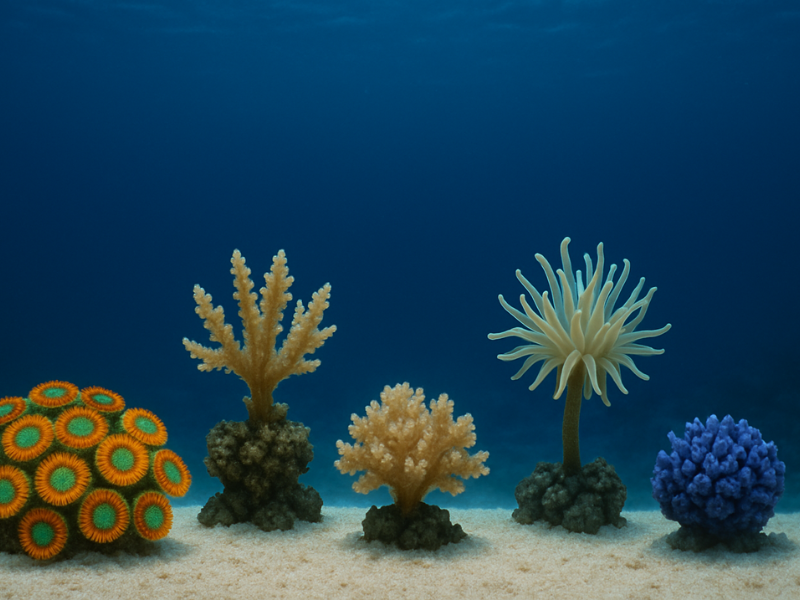
How to Choose Corals for a Reef Tank Based on Type, Color, Behavior, and Ecological Needs
Choosing corals isn’t like choosing plants for a garden. Here every organism has its own story, its temperament, its way of growing, and even its little quirks. The beautiful part is that once you understand them, the tank stops being a box of water and becomes a miniature reef that breathes, evolves, and changes every day.
If you’re starting out, or even if you’ve been at this a while, one of the best decisions you can make is learning to observe. Corals talk, and choosing them well makes your tank more stable, more beautiful, and easier to maintain.
Before Choosing a Coral, Know Your Tank
This point is key. Before you think about which coral you’d like, ask yourself:
• How big is my tank?
• How much light can I realistically provide?
• What nutrient level am I running?
• Do I have a good flow pump?
• How much time do I have for weekly maintenance?
• Is my tank mature or recently set up?
I’ll be completely honest: most of the coral problems we see come from choosing species that don’t fit the tank’s conditions.
Tank Maturity
This is the most important factor and, curiously, one of the most ignored.
A newly set-up tank:
• Has nutrient spikes.
• Has chemical instability.
• Has underdeveloped microfauna.
• Doesn’t have enough biodiversity.
Corals, especially stony ones, hate instability.
That’s why it’s recommended to introduce them gradually, in a logical order:
- Soft corals.
- LPS.
- SPS.
It’s almost the same natural succession that happens in the ocean.
Choosing Corals by Type and Difficulty
Let’s break it down practically.
Ideal Corals for Beginners
If you’re starting out or want absolute stability, these are your best allies:
• Zoanthus
• Sarcophyton
• Xenia
• Clavularia
• Kenya Tree
• Discosoma and Rhodactis
Why are they ideal?
• They tolerate moderate fluctuations.
• They grow fast.
• They have beautiful colors.
• They need little light.
• They add a lot of movement.
They’re perfect for filling out a reef and giving it life from the start.
Corals for Intermediate Hobbyists
Once you have stability, you can move on to:
• Euphyllia (hammer, torch, frogspawn)
• Caulastrea
• Acanthastrea / Micromussa
• Favia
• Goniopora (some varieties)
These need more:
• Moderate light.
• Gentle movement.
• Controlled nutrients.
They have incredible colors and spectacular presence.
Corals for Advanced Keepers
Here come the SPS and some demanding LPS:
• Acropora.
• Montipora.
• Pocillopora.
• Stylophora.
• Seriatopora.
• High-demand Goniopora.
• Delicate Alveopora.
These corals require:
• Lots of light
• Intense, variable flow
• Low, stable nutrients
• Nearly perfect alkalinity, calcium, and magnesium
• An efficient skimmer
• A mature system
They’re gorgeous, but they don’t forgive mistakes.
Choosing Corals by Behavior and Aggression
This is hugely important because, believe it or not, some corals are downright nasty. There are species that extend stinging tentacles at night, and others that release chemical toxins. Mix incompatible species and there will be war.
Corals That Are Dangerous to Others
• Euphyllia
• Galaxea
• Hydnophora
• Favia / Favites
• Platygyra
They extend long tentacles and burn other corals.
Corals That Release Toxins or Grow Too Fast
• Xenia
• Kenya Tree
• Clavularia
• Zoanthus (potential toxins if handled carelessly)
They aren’t bad, but they need to be placed away from delicate species. One safety note on Zoanthus: some colonies carry palytoxin, which is genuinely dangerous, so wear gloves and eye protection when you handle or frag them, and never boil or scrape them dry.
Peaceful Corals
• Montipora (except on direct contact)
• Acropora
• Discosoma
• Rhodactis
• Trachyphyllia
• Sarcophyton
These don’t usually attack, though they can be victims of others.
Choosing Corals by Water Flow
Every coral has a different lifestyle. Some enjoy a natural jacuzzi, others prefer a gentle breeze.
High-Flow Corals
• Acropora
• Montipora digitata
• Pocillopora
• Demanding Goniopora
Flow keeps detritus off them and mimics reef current.
Medium-Flow Corals
• Euphyllia
• Caulastrea
• Acans
• Favia
They open up more and look better with gentle movement.
Low-Flow Corals
• Zoanthus
• Xenia
• Small Sarcophyton
• Rhodactis
Too much flow closes them up or knocks them off their plugs.
Choosing Corals by Available Light
This is what most determines success in a tank.
Low-Light Corals
• Ricordea
• Rhodactis
• Discosoma
• Zoanthus (many varieties)
• Small Sarcophyton
• Xenia
Perfect for tanks with moderate lighting.
Medium-Light Corals
• LPS like Euphyllia, Caulastrea, Acans, Duncan
• Some Montipora
• Moderate Goniopora
High-Light Corals
• SPS: Acropora, Pocillopora, Stylophora
• Tridacna clams (not corals, but they share requirements)
Choosing Corals by Color and How They Combine
This is the most artistic side of a reef tank. You can build combinations:
• Warm palettes: oranges, reds, yellows.
• Cool palettes: blues, greens, purples.
• Strong contrast: pink against green, blue against orange.
• Monochrome zones: all green or all purple.
• Rainbow zones: everything mixed.
One tip:
Fluorescent corals look incredible under blue night lighting.
Choosing Corals by Their Ecological Function in the Tank
Very few people take this into account, and it completely changes how you build a reef.
• Corals that consume few nutrients → stabilize nutrient-rich tanks.
• Fast-growing corals → compete against problem algae.
• Aggressive corals → help keep territories defined.
• Filter-feeding corals → clear particles from the water.
• Structural corals → give shelter to shy fish.
That’s how you design a tank while thinking like a real reef.
Coral Care in Aquariums: Light, Nutrients, Feeding, Flow, Water Chemistry, and Health Signs
Caring for corals isn’t hard once you understand what they need. What’s hard is trying to force conditions that look nothing like the ocean. Once you observe, understand, and respect their pace, I swear the tank starts running itself.
Let’s break down every critical aspect of care, not only technically but with the ecological logic behind each parameter. The better you understand the why, the easier the how becomes.
Light: The Engine of the Reef
If one element defines coral life, both in the ocean and in a tank, it’s light. It’s their energy, their food, and their guide.
Why Is Light So Important?
• It feeds the zooxanthellae living inside the coral.
• It defines coral color (more light → more fluorescence).
• It sets their daily rhythm of opening and closing.
• It influences reproduction and growth.
In nature, every coral picks its home according to light. In a tank, you are the sun, so the adjustment is on you.
Recommended Light Intensity by Coral Type
Not every species wants the same sun:
• Low light (50 to 100 PAR)
- Rhodactis.
- Discosoma.
- Zoanthus.
- Xenia.
- Sarcophyton.
• Medium light (100 to 200 PAR)
- Euphyllia.
- Caulastrea.
- Micromussa.
- Favia.
- Duncan.
• High light (200 to 350+ PAR)
- Acropora.
- Montipora.
- Pocillopora.
- Stylophora.
This isn’t a rigid rule, but it is a solid reference.
How to Tell if a Coral Is Happy With the Light
Watch for:
• Vibrant color → light is right.
• Paleness or very washed-out pastel tones → too much light.
• Loss of color or browning → too little light or excess nutrients.
• Constant retraction → light or chemical stress.
Corals speak through their color and their posture.
Flow: The Wind of the Reef
Water movement matters as much as light, because it:
• Clears detritus and mucus.
• Aids respiration and gas exchange.
• Prevents tissue damage.
• Carries suspended food.
In nature, the water never sits still.
Flow Types by Coral
• Strong, randomized flow: SPS (Acropora, Montipora, Pocillopora)
• Medium oscillating flow: Euphyllia, Goniopora, Caulastrea, Favia
• Gentle flow: Discosoma, Zoanthus, Xenia, Sarcophyton
Signs of Incorrect Flow
• Too much flow:
- Tissue peeling away.
- Soft corals staying retracted.
- Euphyllia that won’t expand.
• Too little flow:
- Detritus piling up at the base.
- Polyps that don’t move.
- Weak tissue or dead patches.
Nutrients: The Most Delicate Balance
Corals need nutrients, but in the right amount. This is what’s hardest to grasp at first.
• Too few nutrients:
- Exaggerated pastel colors
- Tissue loss
- Slow growth
• High nutrients:
- Brown colors.
- Closed corals.
- Competition from algae.
Recommended Ranges
• Nitrate: 2 to 10 ppm (SPS toward the low end)
• Phosphate: 0.02 to 0.08 ppm
Every system finds its own sweet spot. What matters is stability.
Feeding: Yes, Corals Eat
This surprises a lot of people: corals don’t live on light alone. They’re animals, and animals eat.
What Do They Actually Eat?
• Plankton.
• Phytoplankton.
• Zooplankton.
• Amino acids.
• Dissolved organic matter.
• Suspended particles.
Euphyllia catch pieces of food.
SPS consume microscopic food.
Zoanthus absorb dissolved nutrients.
Recommended Frequency
• SPS: two to three times a week in small doses.
• LPS: once or twice a week, with optional direct feeding.
• Softies: they don’t need direct feeding but they benefit from it.
Signs of Good Feeding
• Polyps extended at night.
• Visible growth at tips or plates.
• More intense colors.
Water Chemistry: The Backbone of the Tank
This is where the difference between a mediocre tank and a reef at home gets decided.
The three key parameters for stony corals are:
• Alkalinity.
• Calcium.
• Magnesium.
Ideal Ranges
• Alkalinity: 7.5 to 8.5 dKH.
• Calcium: 420 to 450 ppm.
• Magnesium: 1300 to 1400 ppm.
When those three move in step, the tank thrives.
Consequences of Instability
• Tissue loss in SPS
• Retraction in LPS
• Stalled growth
• Dull colors
That’s why I always recommend regular testing or automated systems.
Essential Trace Elements: The Details That Make the Difference
Small amounts of certain elements are widely credited with making colors pop:
• Iodine → blues and purples.
• Potassium → pinks.
• Iron → greens and browns.
• Manganese → fluorescence.
They have to be added carefully, though. Less is more, and overdosing trace elements causes far more damage than skipping them.
Signs of Health, and Warning Signs
Here’s a small visual dictionary so you can read your tank.
Signs of Good Health
• Extended polyps
• Vibrant colors
• Visible growth
• Response to food
• Natural inflation in LPS
• Glow under blue light
Warning Signs
• Sudden color loss.
• Tissue peeling away.
• Polyps retracted for days.
• Bleached base in SPS.
• Excessively extended tentacles, meaning competition.
• Algae growing over the coral.
A coral warns you long before it dies.
Stability: The Real Secret Nobody Tells You
You can own thousand-dollar lights, luxury pumps, and premium additives. If your tank isn’t stable, none of it helps.
Corals thrive on:
• Routine
• Consistency
• Nearly identical parameters day after day
They don’t like the unpredictable. They’re creatures of habit.
Coral Conservation: What’s Happening in the Ocean and How We Can Help From Our Tanks
Sometimes, standing in front of my tank watching the polyps open or watching blue light turn everything into a fluorescent world, I feel a mix of admiration and sadness. Admiration for how incredible underwater life is, and sadness because I know that out in the ocean many colonies are disappearing.
I don’t want this section to be pessimistic, though. Quite the opposite. I want it to be realistic, thorough, and above all hopeful. Because yes, there are very serious problems, and there are also solutions. You and I, caring for a coral at home, are part of that solution.
The Reef Crisis: What’s Actually Happening
It’s no secret that reefs are in danger, but I want to explain it plainly, without excessive jargon. Corals are suffering from:
• Rising sea temperatures.
• Chemical pollution.
• Excess sedimentation.
• Ocean acidification.
• Overfishing.
• Irresponsible tourism.
• Emerging diseases.
• More frequent extreme events.
All of this stresses the zooxanthellae, which get expelled, and when a coral loses its symbiotic algae, it loses its energy source and bleaches. Without intervention, it dies.
The Problem of Global Warming
A rise of barely 2 °F sustained over several weeks can trigger a mass bleaching event. That isn’t an exaggeration. Corals always live right at the edge of their thermal tolerance. It’s why events like El Niño wipe out entire reefs.
Ocean Acidification: When the Skeleton Dissolves
Atmospheric CO₂ dissolves into the water and lowers the pH.
The result?
The calcium carbonate that forms coral skeletons becomes harder to produce and easier to erode. It’s like asking an architect to build a house with cement that keeps crumbling.
Why the Loss of Reefs Matters
Sometimes we think, “It’s sad, but I’m never going to see those reefs anyway.”
The reality is that marine corals sustain life in plenty of ways that do affect us:
• They produce oxygen.
• They house species we eat.
• They protect coasts where millions of people live.
• They regulate entire ecosystems.
• They harbor compounds used in medicine.
A world without marine corals is a poorer, less stable, less safe world.
The Positive Role of the Hobby in Conservation
Here comes the part that always sparks debate, but I want to explain it from my experience and with real data:
Responsible reefkeeping helps conserve corals, and here’s how:
• Many species now reproduce more in aquariums than in the wild.
• Fragged corals reduce the need to collect wild colonies.
• Breeders and hobbyists maintain genetic lines that could save species.
• Restoration techniques are developed thanks to what’s learned in tanks.
• Real awareness gets created: when you care for a coral, you understand its fragility.
Here’s an example:
Many marine restoration projects use Acropora fragments raised in aquariums.
They care for them, acclimate them, and then replant them in the ocean. That would be impossible without the knowledge generated by hobbyists and scientists.
What You Can Do From Your Own Tank to Genuinely Help
We sometimes think, “I only have a tank at home, I can’t do much.” That isn’t true.
There are plenty of things you can do that matter:
1. Buy Only Corals From Traceable Sources
Look for:
• Aquacultured fragments
• Stores that work with local growers
• Avoiding wild-collected corals whenever possible
• Skepticism toward suspiciously cheap prices
Every cultured frag is one less coral pulled off a reef.
2. Keep Your Corals Healthy
A coral thriving in your tank is a colony that can produce new frags for other people. A sick one conserves nothing.
3. Share What You Know
The internet is full of confusing information. If you learn something useful, pass it on. Helping someone else succeed prevents unnecessary losses.
4. Donate Frags to Restoration Projects if You Get the Chance
More and more centers and nonprofits accept frag donations for reef repopulation. It’s a beautiful way to give something back to the sea.
5. Cut Back on Harmful Products at Home
Many chemicals we pour down the drain end up in the ocean.
Small actions, big impact.
The Emotional Bond With Corals: What Nobody Explains
I mean this sincerely: caring for a coral changes how you see the planet. Suddenly you understand that a small temperature change can kill it, that a pH drop harms it, that badly aimed flow stresses it. Once you grasp that, you also grasp how fragile the entire ocean is.
The tank becomes a small window, an intimate connection to a gigantic ecosystem that urgently needs help, and without meaning to, you become an ambassador for its conservation.
Frequently Asked Questions About Marine Corals and Reef Tank Care
As we care for corals, questions always come up. Some repeat so often that over time they become universal questions we all ask at some point. Here’s a broad collection, explained calmly, without unnecessary jargon, and with the experience that comes from mistakes, successes, and daily observation.
Which coral is best to start with if I’ve never had a reef tank?
I’d say start with hardy soft corals, because they’re the most tolerant and they’ll forgive the early instability of a new tank. My favorites for beginners:
• Zoanthus
• Xenia
• Sarcophyton
• Clavularia
• Rhodactis
• Discosoma
They’re beautiful, they grow fast, they don’t need much light, and they’re a perfect way to learn to read your tank.
Can I mix stony and soft corals in the same tank?
Yes, you can, with some caveats.
• Soft corals like Sarcophyton or Kenya Tree release chemical compounds that can irritate delicate SPS.
• Aggressive LPS can burn both softies and stonies.
The key is planning:
• Place softies downstream, where less flow reaches, so their chemistry doesn’t travel toward the SPS.
• Keep aggressive corals away from sensitive ones.
• Maintain good movement and run activated carbon.
With that balance, coexistence is entirely possible.
How much light do marine corals really need?
It depends on the type:
• Softies → low light
• LPS → medium light
• SPS → high light
Here’s the golden trick, though:
Corals prefer less light at first, then a gradual increase.
If you overdo it, you’ll notice right away in the paleness or the stress.
Why are my corals brown?
It’s almost always down to this:
• Excess nutrients (high nitrate or phosphate).
• Light that’s too low.
The coral accumulates more zooxanthellae and looks brown.
The fix:
• Bring nutrients down slightly.
• Increase light gradually.
• Improve flow to eliminate dead spots.
Why are my corals bleaching?
Bleaching can come from:
• Too much light
• High temperature
• Sudden swings in alkalinity, calcium, or magnesium
• Too few nutrients
• Stress from handling
• Lack of flow
• Disease or predators
Work out what you changed in the last 7 days.
Corals announce any imbalance loudly.
How often do I have to feed marine corals?
It depends on the coral:
• SPS: small doses two to three times a week.
• LPS: once or twice a week with direct feeding if you want faster growth.
• Softies: they survive without feeding, but they do better with some phytoplankton or amino acids.
The important thing is not to overfeed, since that drives nutrients up.
Can I keep a tank with only soft corals?
Yes, and it’s wonderful. It’s usually called a softy reef and it has incredible advantages:
• Stability
• Beautiful movement
• Soft, natural colors
• Low maintenance
• Fast growth
If you want a zen, cheerful, easy tank, softies are for you.
Do marine corals fight each other?
Yes, and sometimes viciously.
They can attack using:
• Stinging tentacles
• Allelopathy (chemical warfare)
• Shading (SPS blocking light from others)
• Invasive growth
If you see long tentacles at night, you probably have a Euphyllia or Galaxea reminding everyone who’s in charge.
How often should I do maintenance on a reef tank?
Here’s a simple routine:
• Daily: observe color and expansion.
• Weekly: change 5 to 10 percent of the water.
• Every two weeks: clean the glass, pumps, and skimmer.
• Monthly: run a full set of parameter tests.
• Quarterly: reposition corals if needed.
Consistency and observation matter more than any piece of equipment.
Why won’t my corals open their polyps?
It can be down to:
• Too much direct flow
• Changes in chemistry
• Predators (gobies, shrimp, crabs)
• Light that’s too intense
• Stress from handling
• Irritation from algae or sediment
If they don’t open within 48 hours, check light, flow, and parameters.
Which marine corals are the most colorful in a tank?
Generally:
• SPS → spectacular fluorescent, metallic, and neon colors (rainbow Acropora, sunset Montipora).
• LPS → intense colors with large, brilliant textures (Euphyllia, Acans, Favia).
• Softies → softer colors that still stand out (rainbow Zoanthus, fluorescent Rhodactis).
Blue lighting makes them glow far more.
When is the best time to frag corals?
When the coral is:
• Actively growing
• Well fed
• Fully acclimated
• Stable in color
• In appropriate flow
Never frag a coral you just bought or one that’s stressed.
Can I keep corals without fish?
Yes, absolutely.
In fact, plenty of people run frag tanks dedicated to corals alone.
You do have to compensate for the missing nutrients, though, because fish waste is what normally supplies the nitrogen and phosphorus corals need. In a fishless tank you’ll have to dose those nutrients deliberately and feed the corals more often.
When can I add the first corals to a new tank?
From about the sixth week on, and soft corals only.
LPS can go in at two or three months.
SPS, at minimum, once the tank has been stable for 6 months.
Is it normal for marine corals to change?
Yes.
In fact, it’s part of how they adapt to light, flow, chemistry, and nutrients.
If they change for the better, great.
If they change for the worse, check your conditions.
What Do I Do if a Coral Starts Dying?
First, don’t panic. Second, identify the cause:
• Too much light?
• Nutrients out of control?
• A recent sudden change?
• Predators?
• Algae growing over it?
• Not enough flow?
Then act:
• Reduce the light.
• Increase flow moderately.
• Adjust chemistry.
• Clean the base if there’s algae.
• Frag the healthy portion if the colony is at risk.
Sometimes saving a small piece means saving the colony.
A World of Corals That Beats Inside and Outside the Tank
Every coral, from the humblest Zoanthus to the most spectacular Acropora, teaches us something. If you’ve made it this far, you’ve probably realized that corals aren’t simple “marine ornaments.” They’re complex, sensitive animals, deeply important to life on this planet. On top of that, they’re silent teachers.
• Patience
• Consistency
• Observation
• Respect for life
• Admiration for small details
Caring for a coral is caring for a small piece of the ocean, and even though our tank is nothing more than a tiny window onto a gigantic world, what we do inside it has a real impact.
The knowledge we gain, the awareness we develop, and the decisions we make, from where we buy a frag to how we handle our waste, all influence the future of reefs.
I always say a reef tank isn’t a hobby, it’s an emotional bridge.
A daily reminder that life is fragile and that, when we care for it with love, it answers with beauty.
Caring for Corals Is an Act of Love Toward the Ocean
It sounds poetic, but it’s true. Every time you watch a polyp open, a coral regain its color, or a colony multiply, you’re watching life thrive because of your care.
It’s impossible not to feel something special. So whether you’re just starting or you’ve been at this for years, I want you to hold on to this idea:
• It isn’t about having the most spectacular tank.
• It’s about understanding, respecting, and accompanying the life you put in it.
Believe me: when you truly care for a coral, you’re also caring for yourself. It calms you, centers you, connects you to something larger.
Tell me:
Which coral was the first one you kept? Which has given you the most trouble? Which species would you like to add to your tank? What excites or worries you about the state of the reefs?
Or just share your questions, your experiences, your scares, your wins. This community grows when we share.