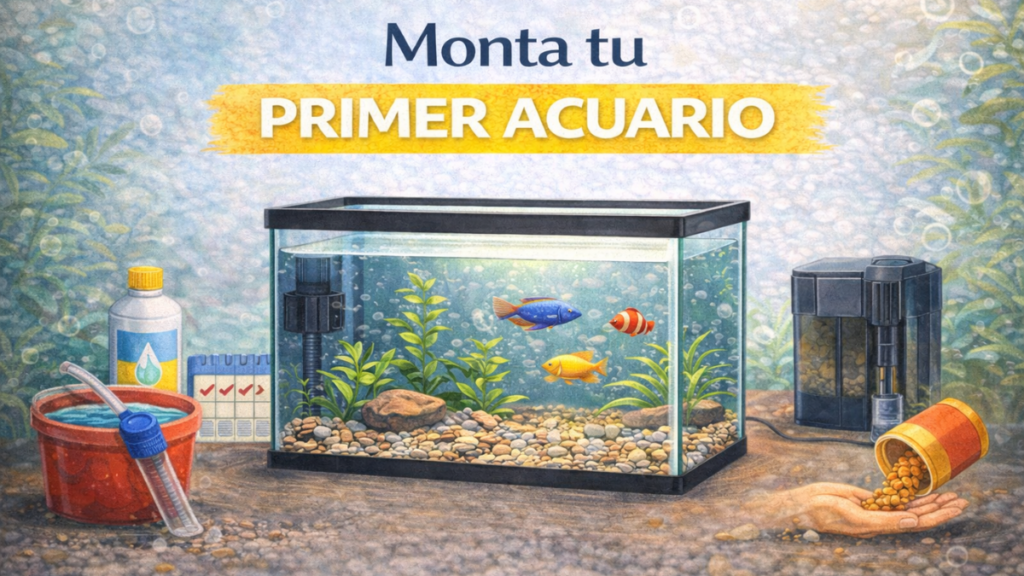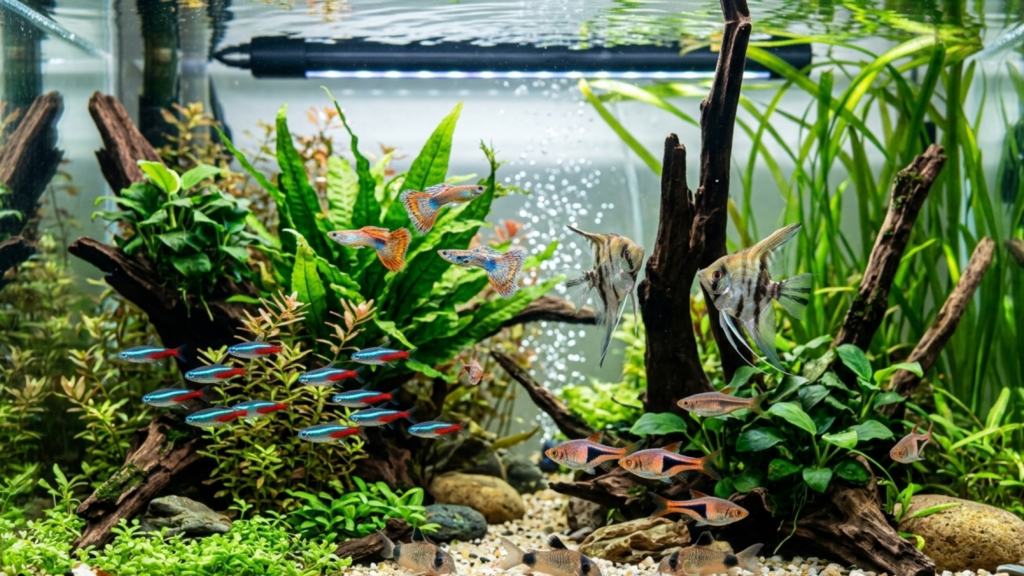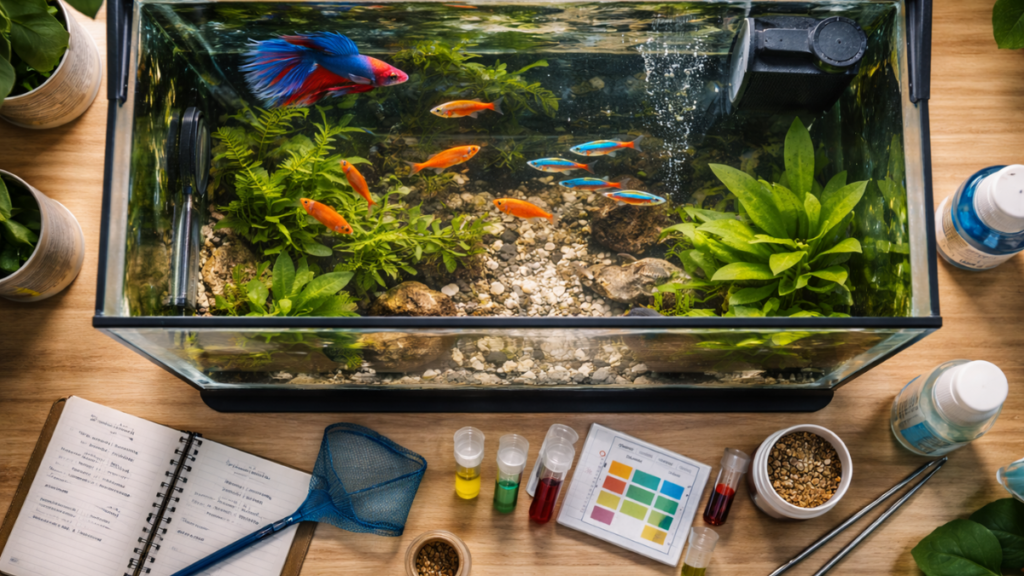
Hi there! Today we’re talking about common fishkeeping mistakes, explained clearly and without jargon. Learn how to avoid them and build a stable, healthy tank that respects the life inside it.
Getting started in fishkeeping usually comes with a lot of excitement. The idea of creating a small underwater universe, watching life in motion, and caring for other living things has something deeply appealing about it. That initial enthusiasm, though, almost always comes hand in hand with mistakes that nobody spells out clearly.
Not out of bad intentions, but because people often assume everyone learns the same way, or that certain failures are inevitable. The reality is that most of the problems that show up in a new tank have very specific causes and, more importantly, they can be avoided.
An Aquarium Isn’t Decoration, It’s a Living Ecosystem
One of the first mistakes in the fishkeeping, and maybe the most important, is thinking of a tank as a decorative object. Something pretty you put in the house, switch on, and it simply works. It may look that way, but the reality is very different. An aquarium is a closed ecosystem where living organisms, biological processes, and delicate balances all coexist.
Constant reactions happen behind that glass. The fish breathe, eat, and produce waste. Bacteria transform that waste. Plants, if there are any, consume nutrients and produce oxygen. Everything is connected, and any change affects the whole.
Once you understand the tank as an ecosystem, the way you care for it changes completely. You stop chasing immediate visual perfection and start prioritizing stability, observation, and respect for natural rhythms.
Why Treating the Tank as Decoration Creates Problems
When the focus is purely aesthetic, impulsive decisions tend to follow. Fish get added too soon, species get chosen only for their color, cleaning gets overdone so everything looks spotless, or constant changes get made trying to fix small details.
Those actions come from a place of care, but they end up creating instability. The tank responds with stress, disease, or imbalances that seem inexplicable, when in fact they’re the direct result of excessive or poorly considered intervention.
The Shift in Mindset That Changes Everything
The real turning point comes when you accept that you can’t control everything in an aquarium. Observing more and touching less is usually the key. Understanding that not everything has to be solved immediately helps create a much healthier environment for the fish and for the person caring for them.
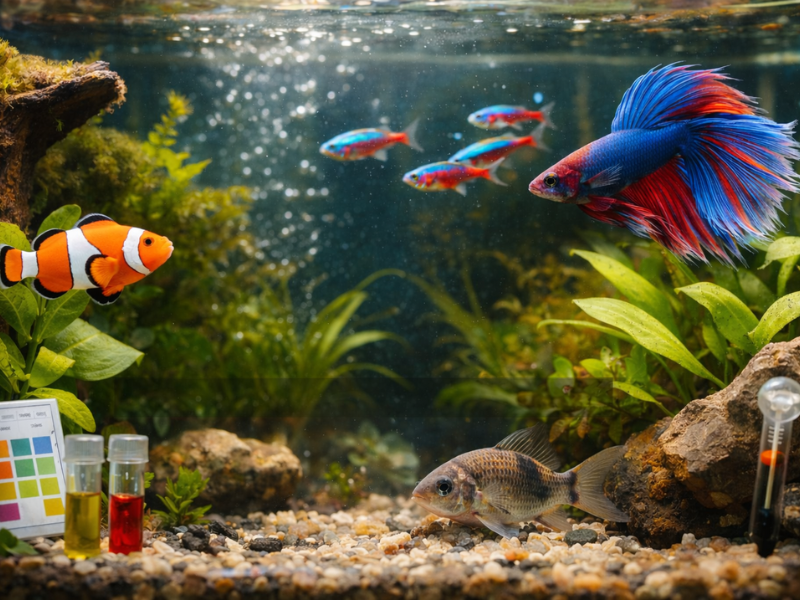
Mistake 1: Rushing, the Silent Enemy of Fishkeeping
Rushing is easily one of the biggest beginner mistakes in this hobby. There’s an almost automatic need to see the tank full of life as soon as possible. You want movement, color, and activity from day one. Biology doesn’t work at that pace, though.
An aquarium needs time to mature. That time isn’t negotiable, no matter how clean the water looks or how powerful the filter is.
Cycling the Tank, the Process Almost Nobody Wants to Wait For
Cycling is the period when the beneficial bacteria that convert toxic substances into less harmful ones get established. During this process, the tank prepares itself to safely house life.
Skipping the cycle or cutting it short usually causes serious problems. Fish can be poisoned even when the water looks crystal clear. You get sudden deaths, strange behavior, and illnesses that seem to have no obvious cause.
Why Clear Water Isn’t Always Healthy Water
How transparent the water looks says nothing about its biological quality. A tank can look perfect and still have dangerous levels of ammonia or nitrite. Stability isn’t visible, it’s built with time and patience.
Respecting the cycle, learning the basic biological processes, and accepting that waiting is also a form of care makes an enormous difference. Every day of patience is an investment in long-term balance.
Mistake 2: Adding Too Many Fish or Choosing Them Without a Plan
Walking into a fish store can be overwhelming. Fish are small, colorful, and seem harmless, so it’s easy to think a few more won’t make a difference. Overstocking, though, is one of the most frequent causes of chronic problems in fishkeeping.
A tank with too many fish becomes hard to maintain. Water quality degrades faster, stress increases, and the system loses stability.
Overstocking and Its Medium-Term Consequences
Even if everything seems fine at first, over time clear signs appear that something is wrong. The fish get jumpy, territorial conflicts break out, and maintenance becomes exhausting. That feeling of constantly correcting something is a clear sign the system is being pushed too hard.
Choosing Fish Without Knowing Their Real Needs
Another common mistake is picking fish without considering their adult size, their behavior, or the water parameters they need. A small fish in the store can grow far bigger than expected and require space the tank simply can’t offer.
Fewer Fish, More Balance
A tank with a few well-chosen fish is usually more stable, more natural, and far more enjoyable to watch. Life unfolds with less tension and maintenance becomes simpler.
Mistake 3: Starting With a Tank That’s Too Small Because It Seems Easier
It’s very common to start with a small tank, thinking you’ll test the waters, keep things simple, or see whether fishkeeping really suits you. On the face of it that sounds logical, but something surprises a lot of people here: the smaller the volume of water, the more delicate the balance.
A small tank reacts far faster to any change. A tiny bit too much food, a temperature swing, or a small lapse in maintenance has a much bigger impact than it would in a larger tank.
Why Small Tanks Are Less Stable
In a small volume, toxic substances concentrate sooner and parameters shift more quickly. That doesn’t mean nano tanks are a bad option, but they do require more precision, more consistency, and more attention.
A lot of early frustration comes from exactly this. Not because the tank is small in itself, but because nobody realizes it needs finer care.
Choosing the Size That Fits Your Daily Life
Beyond the gallons, what matters is that the tank fits your routine. A tank you can maintain calmly, without rushing or stress, has far better odds of thriving than one that turns into a constant burden.
Mistake 4: Trusting Only the Equipment and Forgetting the Biology
Filters, heaters, lights, test kits, and assorted gadgets are all part of a tank’s setup. They matter, but they don’t replace biological processes. Thinking good equipment solves everything is a fairly common mistake. A tank isn’t held together by machines, it’s held together by biological balance.
The filter doesn’t just move water or trap visible debris. Its main job is providing a place where beneficial bacteria can settle and work. Those bacteria are what really keep the water in decent shape.
Common filter mistakes include cleaning it too thoroughly, replacing all the filter media at once, or rinsing it under tap water, which can seriously damage the bacterial colony.
Swapping an old filter for a new one without transferring some of the biological media usually causes imbalance. The tank suddenly loses a big part of its capacity to process waste, even if the new filter is more powerful.
A filter works better when you clean it sparingly, using water from the tank itself, and respect its maturation time. Keeping the biology stable matters more than keeping it visually spotless.
Mistake 5: Cleaning Too Much and Breaking the Balance Without Realizing
This is one of the most paradoxical mistakes, because it comes from wanting to do things right. You want a clean tank with no algae and no visible debris, and you end up removing part of the life that keeps the system stable. A healthy tank is not a sterile one.
The Importance of Microscopic Life
A mature tank holds a huge amount of microscopic life you can’t see but that serves essential functions. Bacteria, biofilm, and small algae are part of the system’s natural balance. Constantly removing them weakens the tank’s ability to regulate itself.
Excessive water changes, deep gravel vacuuming done too often, or full filter cleanings usually cause instability. The fish get stressed, parameters swing, and the tank enters a cycle of constant corrections.
Balanced Cleaning
Maintaining a tank means observing and acting gently. Removing what needs removing, respecting natural processes, and understanding that not everything that looks like dirt is an actual problem.
Mistake 6: Doing Water Changes Without a Plan
Water changes are a fundamental tool in fishkeeping, but used badly they can become a source of stress for the system.
Changing large amounts of water abruptly alters parameters like temperature, pH, and hardness, even when the new water seems perfectly fine.
An excessive change can affect both the fish and the bacteria. A tank needs a degree of continuity to stay stable, and breaking that suddenly usually has visible consequences.
Tap water can contain substances that aren’t dangerous to people but are to the organisms in a tank. Learning how your local water is treated helps you make better decisions.
More Deliberate Water Changes
Regular, moderate, well-planned changes tend to work better than big occasional interventions. Consistency brings more stability than intensity.
Mistake 7: Feeding Badly, Whether Too Much or Too Little
Feeding is one of the most emotional parts of fishkeeping. It’s the moment we interact directly with our fish, and that means we often act on feeling rather than on actual need. The problem usually isn’t the quality of the food, it’s the amount and the frequency.
When you give more food than necessary, some of it goes uneaten and decomposes at the bottom of the tank. That raises the organic load, degrades water quality, and forces the system to work harder than it can handle. Over time that excess turns into algae, unstable parameters, and fish more prone to illness from environmental stress. It’s one of the most frequent mistakes out there.
Many fish associate people with food. They come to the glass, swim more intensely, or seem to be begging, even when they don’t physiologically need anything. Reading that behavior as real hunger leads to overfeeding without noticing.
More Mindful Feeding
Feeding well doesn’t mean feeding a lot. It means offering a diet suited to each species, varied, in measured amounts, while always watching how the fish respond. In most cases it’s better to fall a little short than to overdo it.
Mistake 8: Mixing Incompatible Species
Compatibility between fish goes far beyond whether they attack each other outright. Many species can appear to coexist peacefully while living under constant stress.
Very active fish can continually unsettle calmer species. That stress doesn’t always show up as visible aggression, but it does show up as a weakened immune system and abnormal behavior.
The Adult Size Problem
Choosing fish without accounting for their final size is one of the most frequent causes of overwhelmed tanks. A fish that grows bigger than expected ends up with less space than it needs, which affects both its wellbeing and the tank’s overall balance.
Parameter Compatibility
Every species has specific preferences for temperature, pH, and hardness. Keeping fish with very different needs in the same tank forces you to compromise the parameters, and that rarely ends well.
Mistake 9: Not Testing Parameters, or Testing Them Obsessively
Water parameters are a tool, not an end in themselves. Ignoring them completely and obsessing over them are two extremes that both create problems.
A tank can look stable while quietly accumulating internal imbalances. Without at least some testing, there’s no way to know whether the system is truly working.
The opposite extreme leads to intervening constantly at every small fluctuation. That approach creates instability, because the tank never gets time to adapt.
Testing more often at the start and spacing it out as the tank matures is usually an effective strategy. Understanding trends over time is more useful than fixating on isolated readings.
Mistake 10: Getting Plants and Lighting Wrong
In planted tanks, light and plants become a critical point and another source of mistakes. A lot of frustration originates in unrealistic expectations or in a lack of prior research.
Assuming All Plants Are the Same
Every plant has specific needs. Some grow with little light and few nutrients, while others require very particular conditions to thrive. Introducing demanding plants without the right environment usually ends in decline and algae growth.
Too Much Light as a Trigger for Imbalance
Increasing light intensity or duration without adjusting nutrients and maintenance alongside it usually causes an algae bloom. Light on its own doesn’t improve a tank.
Plants That Aren’t Fully Aquatic
Plants that aren’t adapted to living permanently submerged are still sold as aquarium plants. They eventually rot, releasing organic matter and harming water quality.
Mistake 11: Trusting the Store Blindly Without Cross-Checking
Fish stores are a fundamental part of fishkeeping, and many of the people working in them have experience and good intentions. Even so, relying solely on what they tell you without checking it can lead to poor decisions.
Every tank is different, and what works in one doesn’t always work in another. Generalized advice, however well meant, doesn’t always fit your specific case.
When someone advises you without knowing your actual tank volume, your water parameters, or the species you already keep, it’s easy for incompatibilities or specific needs to get missed. That usually isn’t bad faith, it’s a lack of context.
Becoming the Person Responsible for Your Own Tank
The more you learn, the better questions you ask and the better decisions you make. Getting information from several sources and observing your own tank gives you a solid base for caring for it with more judgment and confidence.
Mistake 12: Buying Without a Clear Plan
Impulse purchases are very common, especially early on, and they’re another big mistake. A new fish, an eye-catching plant, or a different piece of decor all seem harmless, but without planning they can throw off the tank’s balance. Every new element introduces change, even if you don’t notice it right away.
A tank without a plan usually ends up mixing species, styles, and requirements that don’t fit together. That translates into constant adjustments and a feeling that nothing ever quite settles.
Planning Isn’t Limiting Yourself
Having a plan doesn’t mean being rigid, it means being coherent. Knowing what kind of tank you want, which species are compatible, and how much maintenance you can take on makes the whole path easier and avoids unnecessary frustration.
Learning to Read Your Tank, the Skill That Changes Everything
One of the biggest lessons in fishkeeping is developing your powers of observation. A tank communicates constantly through fish behavior, plant condition, and the general look of the water. Learning to read those signals lets you act before problems get worse.
Signals From the Fish
Changes in behavior, rapid breathing, dulled colors, or isolation usually mean something isn’t working. Those signals don’t always point to a specific disease, but they do point to an environment that needs adjusting.
Signals From the Environment
Persistently cloudy water, strange smells, or a sudden algae outbreak are also warnings. Not everything requires immediate intervention, but everything deserves attention.
Mistake 13: Reacting Impulsively to Any Problem
When something goes wrong, the most common reaction is trying to fix everything at once. Big water changes, corrective products, intensive cleaning, or drastic modifications usually make things worse. Stability is rarely recovered in a hurry.
Changing one variable and watching how the tank responds gives you a much better understanding of what’s happening. Minimal, considered intervention tends to be more effective than several simultaneous changes.
Mistake 14: Comparing Yourself to Perfect Tanks and Losing Perspective
Social media shows spectacular tanks that look flawless at all times. Comparing yourself to those images can create frustration and a sense that you’re doing something wrong, and it’s one of the worst traps in fishkeeping.
What usually doesn’t get shown are the years of learning, the mistakes, and the constant adjustments behind them.
Developing a tank is a slow process. Respecting that pace and valuing small progress helps you enjoy the journey more and make more balanced decisions.
Mistake 15: Forgetting That You’re Part of the Ecosystem Too
This mistake is subtler than the others, but its impact is enormous. In fishkeeping it isn’t only the water, the fish, or the equipment that matter. The person caring for the tank is an active part of the system, even if they don’t always realize it.
Rushing, exhaustion, frustration, or the need for control all show up in how you intervene. When you act from anxiety, you tend to touch too much, change things unnecessarily, and break balances that were working fine.
A tank responds better when it’s cared for calmly. Observing closely, waiting before acting, and accepting that not everything can be controlled produces more stable systems. Over time, that way of caring carries beyond the tank and becomes a different way of relating to slow processes in general.
Fishkeeping as Everyday Conservation
Talking about conservation doesn’t always mean big projects or distant actions. In fishkeeping, conservation starts with the small, consistent decisions you make at home.
Caring for a tank properly reduces unnecessary deaths, avoids repeat purchases from avoidable losses, and eases the pressure on irresponsible collection and breeding. Every stable tank is a small contribution to a more respectful approach to aquatic life.
Choosing Consciously Makes a Difference
Going for captive-bred animals, doing your research before buying, and caring for them well so you never have to replace them are simple gestures with a real impact, and they spare you a lot of the mistakes above.
Frequently Asked Questions About Fishkeeping Mistakes
Is it normal for fish to die at the beginning?
It can happen, but it shouldn’t be treated as inevitable. In most cases, early deaths are related to an incomplete cycle, transport stress, incompatibility, or poor water quality. Reviewing those points usually makes the difference.
How often should you clean an aquarium?
There’s no universal frequency. A mature, stable tank usually needs less cleaning than a newly set-up one. What matters is observing and acting only when necessary, avoiding aggressive cleaning.
How do I know if my tank is stable?
A stable tank shows relatively constant parameters, fish behaving naturally, and maintenance that doesn’t require continual corrections. Stability shows up in the routine rather than in any single moment.
Do algae always mean there’s a problem?
Not necessarily. Algae are part of the ecosystem. The problem appears when there’s a persistent imbalance. Learning to tell the difference between normal presence and uncontrolled growth helps you act with better judgment.
Are live plants always the better option?
In many cases yes, because they help stabilize the system and consume nutrients. Even so, you need to know their requirements. Choosing easy plants at first is usually a good decision.
How long does a tank take to really look good?
A tank doesn’t reach its best version in weeks. The process usually takes months. Over time the system settles, and the aesthetics show up as a consequence of the balance rather than as something you force into place.
Making mistakes in fishkeeping doesn’t mean you’re doing it badly, it means you’re learning. Every mistake you understand is a chance to improve how you care for your tank and to build more stable, more respectful environments.
Fishkeeping isn’t about having a perfect tank. Once you stop forcing things and start observing, the tank responds with balance, and the enjoyment gets much deeper.
Caring for an aquarium teaches us patience, responsibility, and respect for natural timelines. It’s a quiet lesson, but a constant one, and it reaches well beyond the glass.
Every experience is different, and sharing yours helps other people who are just starting. If you’ve made any of these mistakes, if one of them was especially hard, or if there’s something you wish you’d known earlier, I’d love for you to leave it in the comments.
Learning together makes this road a lot friendlier.